Second International Study Tour of First World Chinese Essay Competition Visits Luoyang
· Texte original en anglais
RubriquesVoyages d’études internationauxConcours mondial de rédaction en chinois
September in central China brings clear skies and refreshing autumn breezes. Participants in the second international study tour of the First World Chinese Essay Competition—‘Walking China, Inheriting Cultural Heritage’—visited Luoyang, Henan Province. At a Tang Sancai intangible cultural heritage workshop, they personally experienced the masterful craft behind the saying ‘one colour enters the kiln, ten thousand emerge’. Before the Buddha niches of the Longmen Grottoes, they touched the stone-carving art spanning the Northern Wei to Tang dynasties. At Yingtian Gate, they donned Hanfu robes and styled their hair to become ‘Tang-dynasty palace travellers’, strolling through the ancient city—a series of activities blending historical exploration with hands-on practice enabled participants to deeply appreciate the profound heritage and vibrant appeal of Central Plain culture.
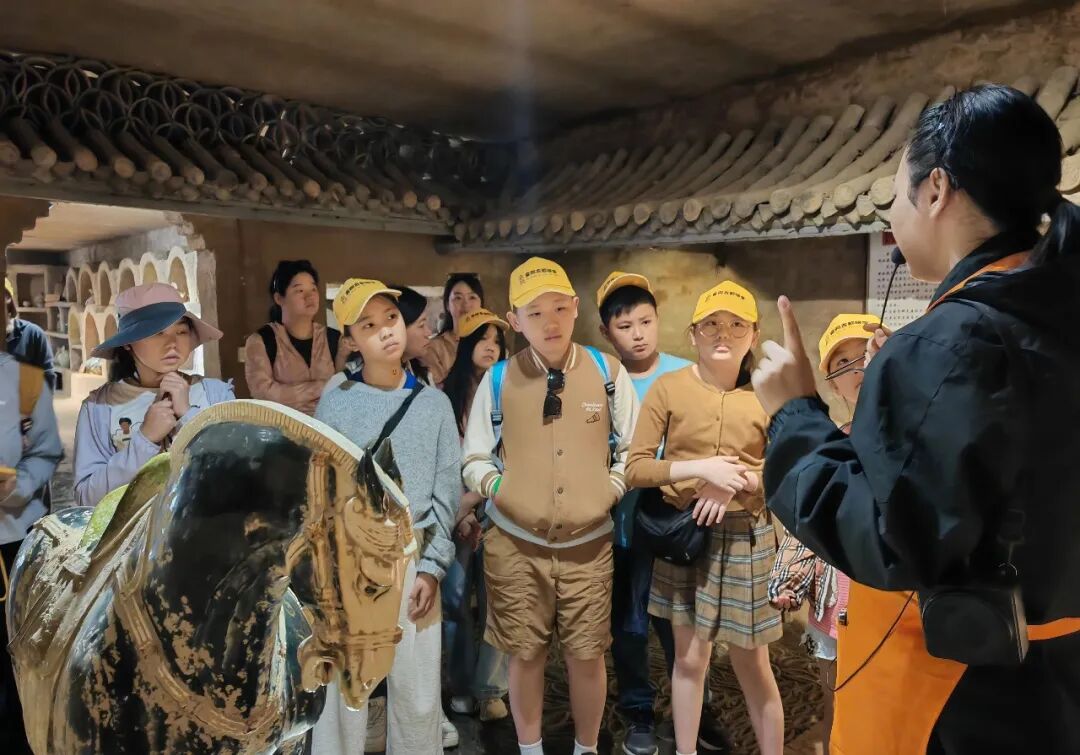
The first stop of the Luoyang study tour was the Tang Sancai intangible cultural heritage workshop, launching a dialogue with this ‘treasure of Eastern art’. An inheritor of the intangible cultural heritage first introduced the history of Tang Sancai—from funerary objects in Tang-dynasty tombs to world-renowned art treasures today—then detailed the core techniques of material selection, clay shaping, glazing, and firing, especially highlighting the mystery of ‘glaze flow’ and the difficulty of ‘two-stage firing’. Next, participants gathered around workbenches and used brushes to apply yellow, green, and white glazes onto unfired pieces, sketching decorative patterns. Though their brushwork was tentative, seeing their own glazed pieces transformed by firing into vivid, multicoloured works prompted widespread admiration for the ingenuity of Tang artisans and the wonder of ancient Chinese ceramic craftsmanship.
Leaving the Tang Sancai workshop, participants visited the Longmen Grottoes, walking slowly along the flagstone path beside the Yi River. Guided by interpreters, they uncovered the millennium-old stories of this ‘treasury of stone-carving art’. From the majestic Vairocana Buddha to the exquisitely carved Binyang Central Cave; from the ‘Gaosu Niche’s Principal Buddha’, left by Tang craftsmen, to the ‘Guyang Cave inscriptions’ of the Northern Wei period—each Buddha’s flowing robes and every niche’s delicate carvings narrated the artistic aesthetics and religious beliefs of different dynasties. Participants paused to gaze, listened to tales of the great Buddha’s construction, and traced with their fingers the crisp stone-carved motifs still visible despite centuries of wind and rain—gaining a tangible sense of central China’s historic role as a crossroads of civilisations.
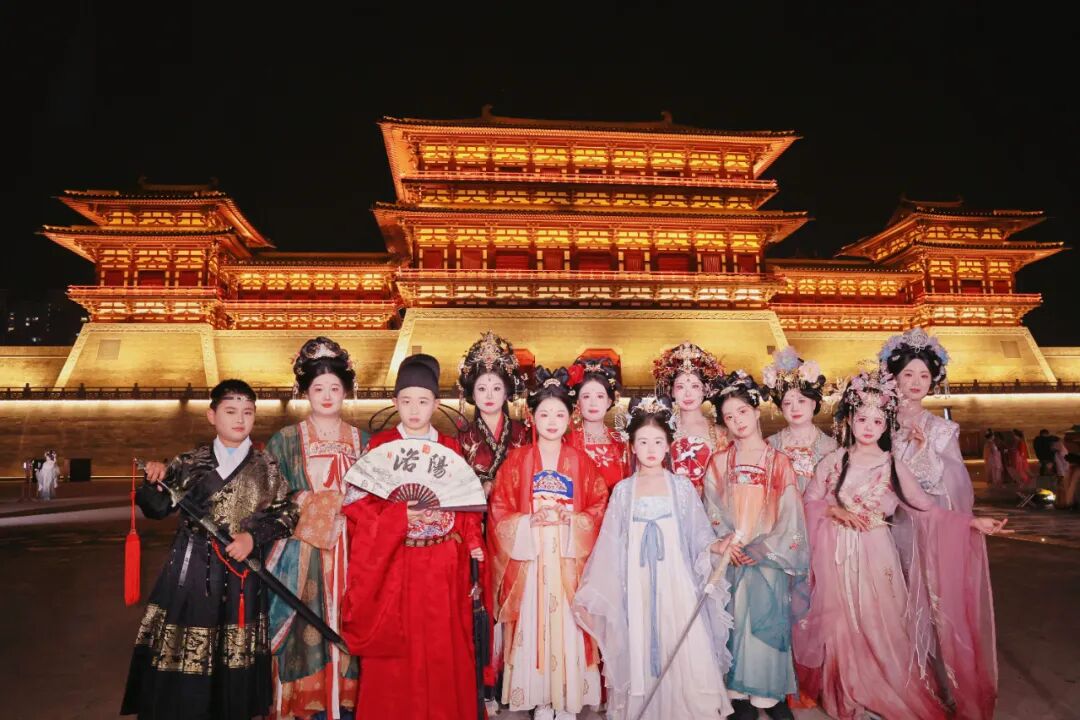
As dusk fell, the Hanfu dressing experience at Yingtian Gate began. Participants entered a Hanfu experience studio and selected garments with staff assistance. Hair styling, eyebrow drawing, applying floral forehead decorations (huadian), and wearing hairpins……After completing the full ensemble, participants seemed to ‘travel back in time’. In small groups, they strolled across the square before Yingtian Gate—some mimicking ancient salutes with clasped hands, others posing for photos beneath red lanterns—savouring the unique charm born of traditional dress harmonising with ancient architecture. Many remarked, ‘It feels just like stepping into a historical costume drama.’
From tracing stone-carving origins at the Longmen Grottoes, to practising craftsmanship at the Tang Sancai workshop, to experiencing Hanfu at Yingtian Gate, the September Luoyang trip enabled participants both to feel the historical texture of Central Plain civilisation and to witness the living vitality of traditional crafts and dress. The ‘Walking China, Inheriting Cultural Heritage’ study tour bridges cultures through on-site visits, hands-on practice, and immersive experiences—not only advancing Chinese-language dissemination but also helping participants understand, through direct engagement, the millennia-old cultural lineage and confidence embodied by the Central Plains, thus deepening mutual learning among civilisations.
Li NaRen LuLi Kaizhen

Source: https://mp.weixin.qq.com/s/pz2e8KYd7ZFmEvp496jP9w · Lire l'article original ↗