World Chinese Essay Competition: International Study Tour Explores the Forbidden City and Temple of Heaven
ColumnsInternational Study ToursWorld Chinese Composition Competition
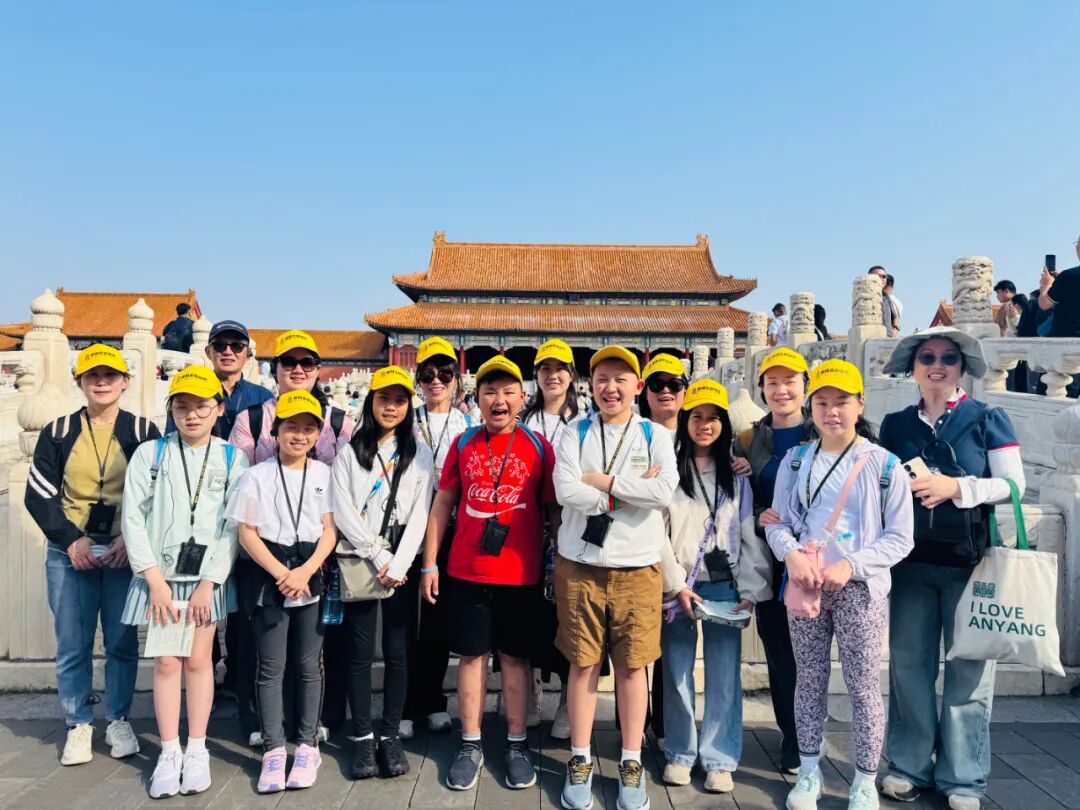
On 21 September, participants in the second international study tour of the inaugural World Chinese Essay Competition—titled 'Walking China, Inheriting Cultural Heritage'—visited the Palace Museum and Temple of Heaven Park, driven by curiosity and enthusiasm for Chinese culture. This study tour, combining on-site visits with interactive challenges, enabled teenagers from Australia to experience history firsthand and appreciate the profound architectural and philosophical traditions of China.
Exploring the Palace Museum: Decoding 'Imperial Secrets' Amid Red Walls and Yellow Tiles
'Why are the Palace Museum’s walls red and its tiles yellow?' 'Are the 'golden bricks' in the Hall of Supreme Harmony really made of gold?' With such questions in mind, participants embarked on an imperial-culture-themed challenge tour guided by study mentors.
Mentors used architecture as a textbook, explaining historical anecdotes and architectural knowledge—from the 'three visible, five hidden' structure of Meridian Gate to the 'walking beasts' adorning the roof ridge of the Hall of Supreme Harmony. Participants learned that yellow glazed tiles symbolise supreme imperial authority, while red palace walls derive from ancient reverence for 'fire' in the Five Elements theory, representing solemnity and auspiciousness. The 'golden bricks' laid on the floor of the Hall of Supreme Harmony are, in fact, fine square bricks fired in imperial kilns in Suzhou; they earned their name because they emit a metallic sound when struck, and their production involves over twenty steps and nearly two years’ work—leaving participants in awe of ancient craftsmanship.
During the 'Palace Museum Knowledge Challenge', participants received task cards. Some paused to observe architectural details; others gathered to discuss historical sources—deepening their understanding of the Palace Museum as a 'UNESCO World Heritage Site' through interaction. Participant Qiu Haohao said: 'I read about the Palace Museum in textbooks before—it felt distant. Today, touching the red walls and solving challenge questions helped me truly feel its stories and warmth.'
Tracing the Temple of Heaven: Reflecting on 'Harmony Between Heaven and Humanity' Beside the Hall of Prayer for Good Harvests
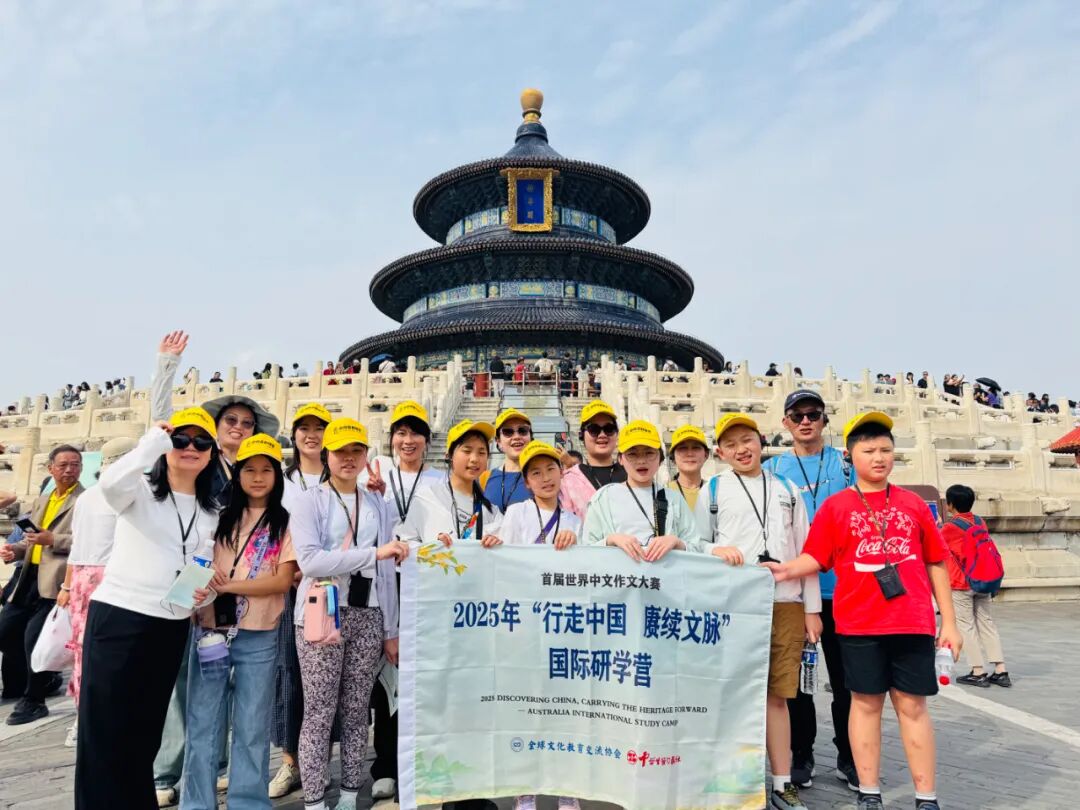
After leaving the Palace Museum, the group proceeded to the Temple of Heaven Park for the second thematic session: 'Heaven–Human Relations'. As the sacred site where Ming and Qing emperors performed sacrifices to Heaven and prayed for bountiful harvests, the Temple of Heaven embodies the traditional Chinese concept of 'harmony between heaven and humanity' through its distinctive layout and design philosophy.
At the Hall of Prayer for Good Harvests, participants looked up at the blue-glazed tile roof—its colour symbolising the sky—and learned that its 28 interior pillars represent the 'four seasons', 'twelve months', 'twelve double-hours', and 'twenty-eight lunar mansions', seamlessly integrating natural cycles with architectural structure. The 'Temple of Heaven Challenge' focused on 'ritual etiquette': participants observed inscribed plaques and identified sacrificial vessels to answer fun questions, gradually grasping ancient reverence for nature and hopes for abundant harvests.
Walking to Inherit Heritage, Learning to Grow
This one-day study tour of the Palace Museum and Temple of Heaven—structured around 'on-site visits + interactive challenges'—enabled participants to move beyond textbooks, acquiring systematic knowledge of ancient Chinese architecture, imperial culture, and sacrificial traditions through direct observation and hands-on experience. From imperial rites at the Palace Museum to cosmological thought at the Temple of Heaven, and from ancient craftsmanship to the essence of traditional culture, participants not only gained knowledge but also felt the breadth and depth of Chinese civilisation.
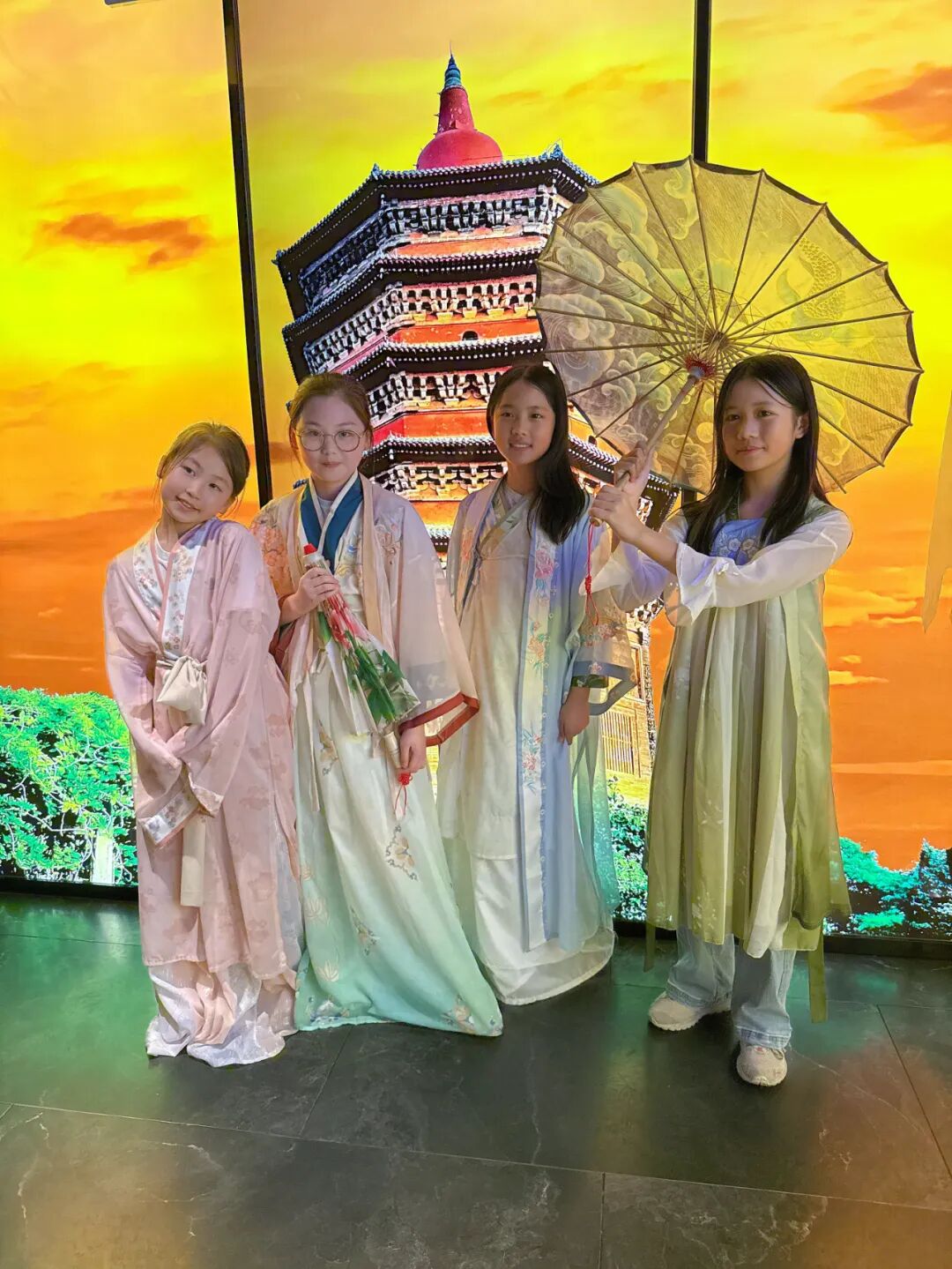
According to the study tour’s coordinator, the 'Walking China, Inheriting Cultural Heritage' initiative aims to bring overseas teenagers into close contact with China’s cultural heritage through immersive experiences, building bridges for cultural exchange between China and other countries. Subsequent tours will visit cultural landmarks including the Chinese Characters Museum and the Qingming Riverside Landscape Garden, enabling participants to inherit China’s cultural lineage through travel—and to become both perceptive learners and active communicators of Chinese culture. As participant Xie Yino put it: 'This study tour is like a key that has opened the door to understanding China for me—I’ll share the stories I’ve heard here with friends back home.'
(Correspondent: Li Na)
Li NaRen LuLi Kaizhen

Source: https://mp.weixin.qq.com/s/Z-9WC9thnKsTNSkdN548Zg · Read the original ↗