Second International Study Tour of First World Chinese Essay Competition Visits Anyang
ColumnsInternational Study ToursWorld Chinese Composition Competition
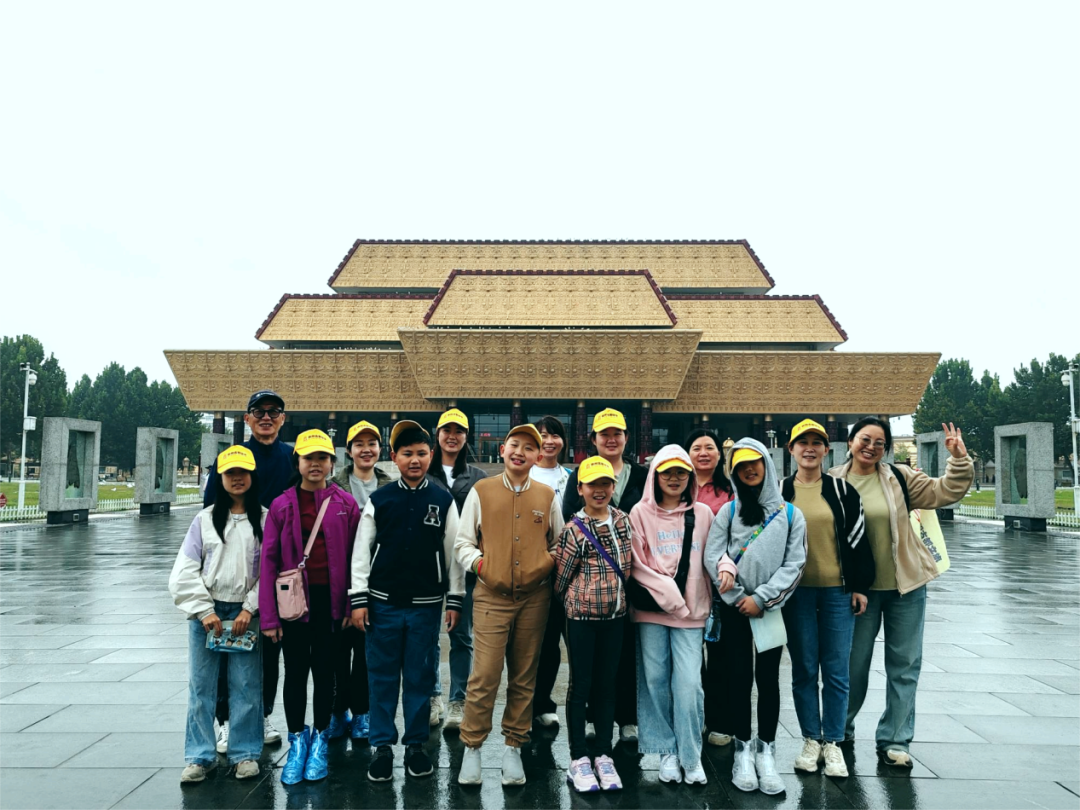
On 22 September, participants in the second phase of the First World Chinese Essay Competition’s ‘Walking China, Sustaining Cultural Heritage’ international study tour visited Anyang, Henan. At the Yin Ruins Museum, they traced the roots of Chinese civilisation; at the Chinese Characters Museum, they decoded the origins and evolution of Chinese characters; and in Xiaotun Village—the site of the Yin Ruins—they crafted miniature bronze ding vessels under the guidance of intangible cultural heritage practitioners. In the evening, they attended a classical studies lecture by Ms Kong Yaping to explore the mysteries of Chinese writing. This series of immersive experiences enabled participants to deeply appreciate the profound depth of China’s cultural heritage.
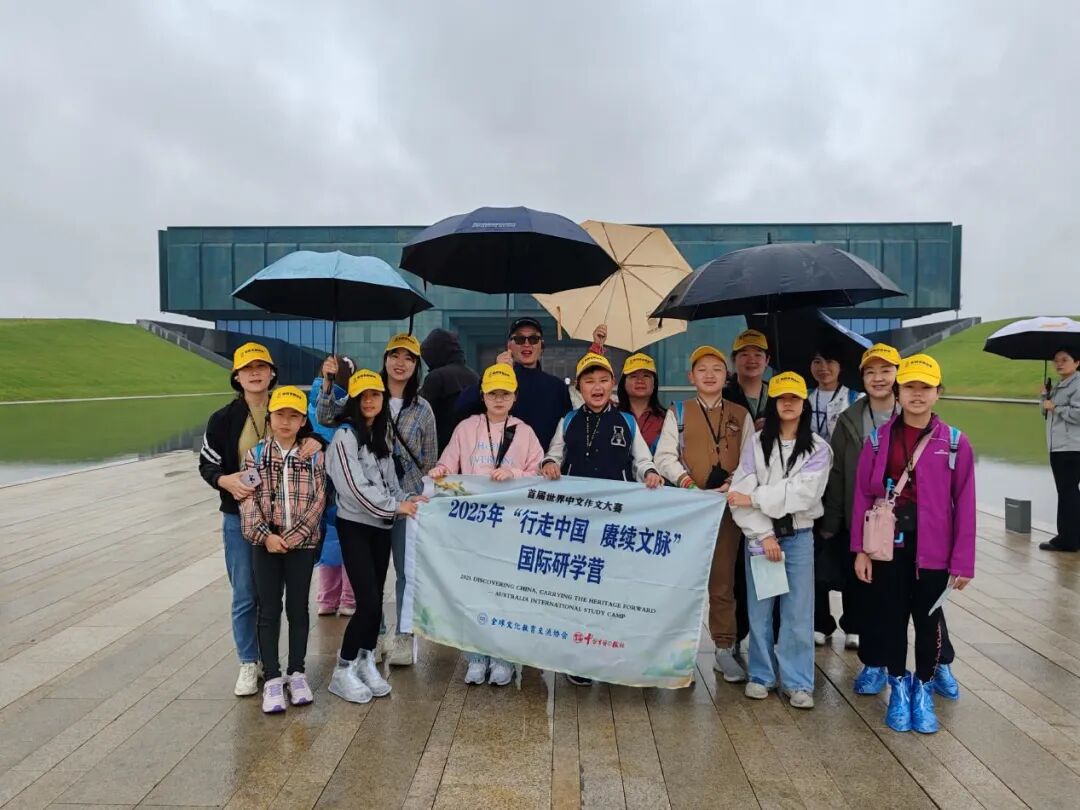
The first stop was the Yin Ruins Museum, where participants encountered artefacts bearing over three millennia of history, guided by museum staff. From oracle bones inscribed with ancient divinatory texts to exquisitely decorated bronze ritual vessels, each object illuminated aspects of Shang-dynasty politics and daily life—transforming the legendary phrase ‘one oracle bone astonished the world’ into a tangible, sensory experience. Participants paused frequently to observe closely and ask thoughtful questions, immersing themselves in the early civilisational codes of China.
Next, participants visited the Chinese Characters Museum to trace the evolution of Chinese script. Exhibits and interactive installations clearly illustrated the developmental trajectory of Chinese characters—from the pictographic vitality of oracle bone script and the solemn antiquity of bronze inscriptions (jinwen), to the standardised forms of seal script (xiaozhuan) and clerical script (lishu). Several participants joined staff in performing ‘oracle bone script calisthenics’, using bodily movement to experience the aesthetic power and cultural resonance of Chinese characters.
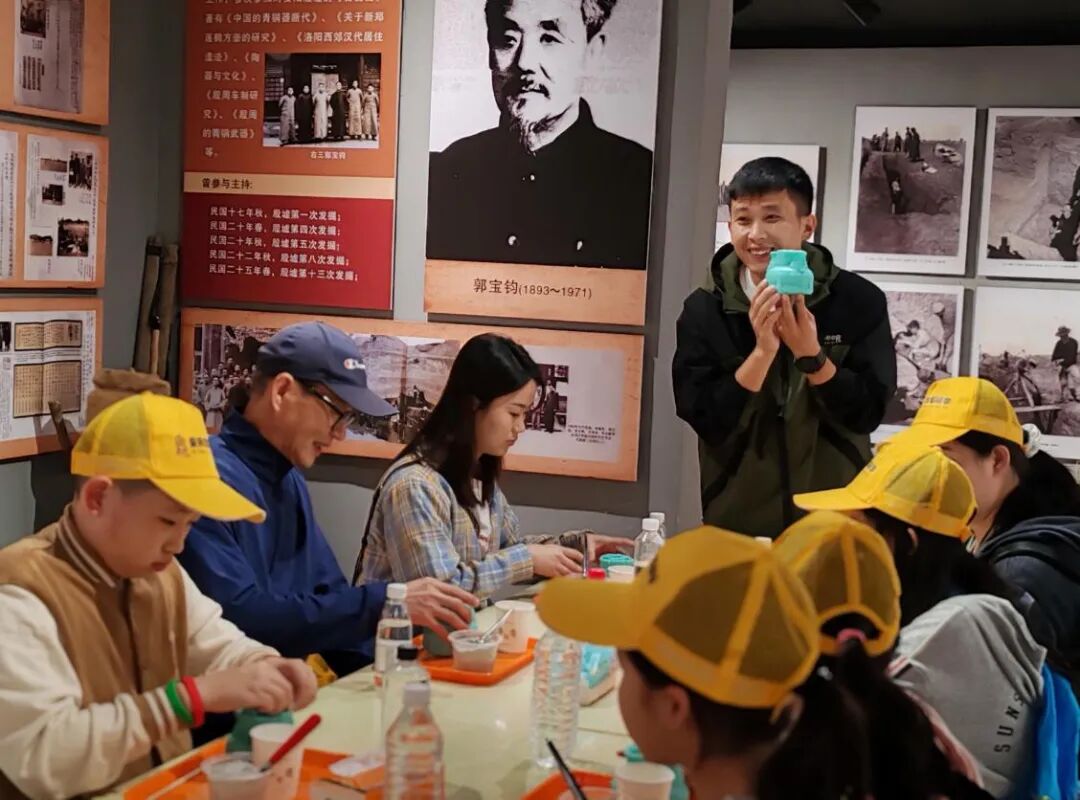
The most distinctive activity was the bronze ding vessel-making workshop in Xiaotun Village—the core area of the Yin Ruins. The tour specially invited intangible cultural heritage practitioners to lead the session. The instructor first explained the ancient ‘mould-and-cast’ technique used during the Shang dynasty, referencing actual bronze artefacts unearthed at the Yin Ruins, then demonstrated step-by-step the processes of mould-making, casting, and pouring. Participants gathered around workbenches, carefully following each stage—from shaping the clay model to removing the cast—to produce their own miniature bronze ding vessels. As the warm, freshly cast vessels emerged, participants expressed admiration for the sophistication of intangible cultural heritage skills and the ingenuity of ancient artisans.
As night fell, participants gathered for a classical studies class. Kong Yaping—a descendant of Confucius in the 77th generation and author of *Chinese Characters: Stories of Chinese Thinking and Script*—travelled from Guangzhou to deliver an expert lecture. A scholar specialising in Chinese character studies, Ms Kong has long promoted traditional Chinese culture globally. Drawing on the oracle bone inscriptions seen earlier that day, she delivered a talk titled ‘The Civilisational Codes Within Characters’. Beginning with the frequent appearance of terms such as ‘jia’, ‘yi’, ‘bing’, and ‘ding’ in oracle bone script, she explained the origins of the heavenly stems and earthly branches, and how Shang-dynasty people used them for calendrical and divinatory purposes—revealing these symbols as early civilisation’s ‘temporal coordinates’. She then focused on the character ‘geng’ (‘to continue’) from the tour’s theme ‘Sustaining Cultural Heritage’, analysing its structure: ‘si’ (silk thread) suggesting continuity, and ‘geng’ (phonetic component) implying endurance—thus illustrating how ‘sustaining cultural heritage’ signifies the unbroken transmission of civilisational light, like an unspooling silk thread. Participants raised hands eagerly, connecting their daytime observations with classroom insights, deepening their understanding of character-based cultural continuity through dialogue across time.
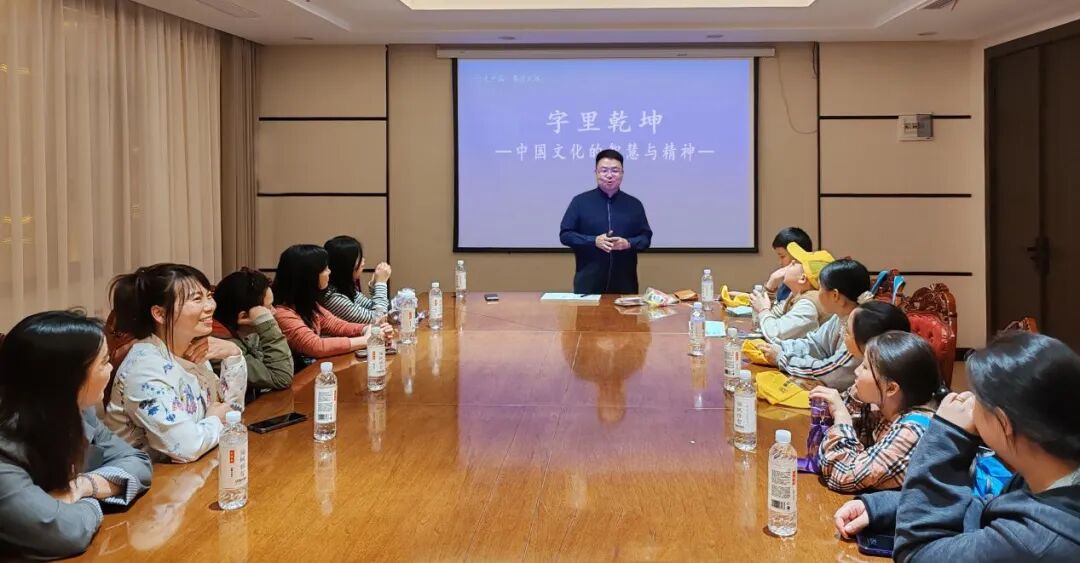
From contemplative engagement with museum artefacts, to hands-on practice in intangible cultural heritage workshops, to scholarly exploration of character origins in classical studies lectures, this visit to Anyang enabled participants both to touch the source waters of Chinese civilisation and to witness the living vitality of intangible heritage and script culture. The ‘Walking China, Sustaining Cultural Heritage’ study tour bridges field visits, experiential learning, and classroom instruction—not only advancing Chinese language dissemination but also fostering deeper intercultural dialogue and mutual understanding.
(Correspondent: Li Na)
Li NaRen LuLi Kaizhen

Source: https://mp.weixin.qq.com/s/u4RFn5L-w4hSTTTVuo-aDg · Read the original ↗